5 ways 3D laser scanning transforms steel and MEP projects
Blog Post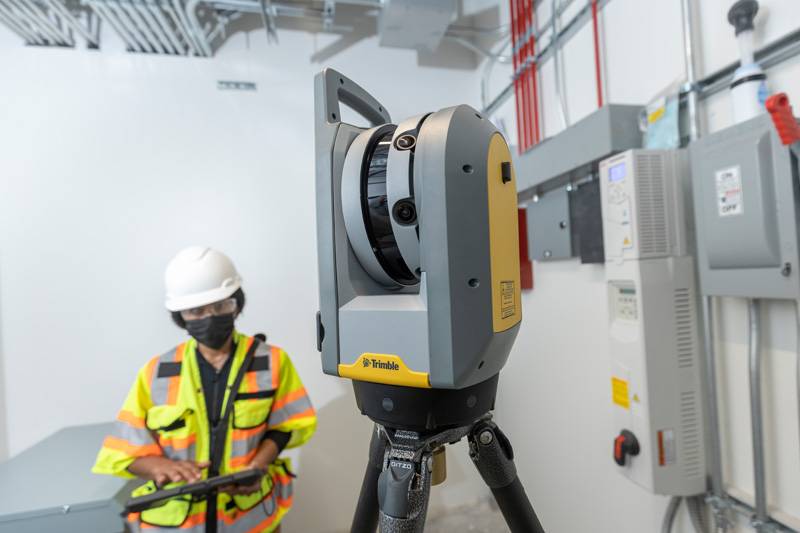
A practical guide for Canadian fabricators, erectors, and mechanical, electrical, and plumbing contractors
TLDR: Precision and efficiency aren’t optional in construction; they’re the difference between staying on schedule and falling behind. For steel and mechanical, electrical, and plumbing (MEP) contractors, adopting tools like 3D laser scanners can dramatically improve accuracy, reduce rework, and streamline coordination with other trades.
Read on to learn how laser scanning can support your team, strengthen your workflows, and deliver better results on every project.
—
Steel and MEP projects across Canada are under more pressure than ever: tighter schedules, more complex buildings, stringent tolerances, and constant coordination with other trades. When drawings, models, or installed conditions don’t match what’s expected, the result is delays, rework, and cost overruns.
That’s why more Canadian steel and MEP professionals are turning to 3D laser scanning—not as a specialty service, but as an everyday jobsite tool. Modern scanners like the Trimble X7 are fast, simple, and built for field crews who need reliable information to keep projects moving.
Here are the five biggest ways scanning is changing steel and MEP work in Canada.
-
It provides highly accurate as-built conditions for prefabrication
Steel and MEP contractors depend on exact measurements. Small inconsistencies in slab elevation, beam placement, structural offsets, or previous trade work can mean hours — or days — of rework during installation.
A 3D scan captures the entire environment in millimetre-level detail, giving fabricators and BIM teams dependable data before they cut, weld, bend, or spool anything.
For steel:
- Verify column locations, beam cambers, edge-of-slab conditions
- Confirm embeds, base plates, and anchor bolt placement
- Identify clashes before steel goes into production
For MEP:
- Validate mechanical room dimensions
- Verify pipe chases, plenums, and congested zones
- Confirm overhead structural clearance
- Ensure prefabricated modules will fit the first time
Accurate as-builts reduce RFIs, prevent redesign cycles, and increase confidence in prefabrication, a major competitive advantage for Canadian contractors adopting offsite methods.
-
It simplifies layout, installation, and QA/QC
When steel and MEP crews rely on incomplete or outdated information, onsite installation becomes a problem-solving exercise. Scanning makes layout and verification faster, more precise, and less labour-intensive.
Concrete examples your customers will relate to:
- Steel erectors can check beam-to-column fit, base plate rotation, and hole alignment before cranes arrive.
- Mechanical installers can confirm hanger locations, verify sleeve/penetration alignment, and check elevation consistency before rough-in.
- Electricians can validate conduit paths and panel wall locations with confidence instead of relying on tape or chalk lines.
Instead of fixing issues during installation, crews can identify and correct conflicts earlier, when they are far cheaper to solve.
-
It prevents costly rework across all trades
Rework is the enemy of steel and MEP margins. A single out-of-place penetration or beam can ripple across every trade on the job.
3D scanning helps teams catch misalignment early:
- Off-centre anchors or embedded plates
- Beams that drift outside tolerance
- Slab inconsistencies affecting ductwork or piping elevation
- MEP penetrations installed in the wrong location
- Site conditions that don’t match the coordinated model
By comparing the scan to the model, foremen and supers get a clear “go/no-go” decision before moving forward, eliminating guesswork and minimizing schedule risk.
-
It improves coordination and communication with GCs, designers, and other trades
Steel and MEP contractors often bear the cost of field conflicts, even when the underlying issue wasn’t theirs. Scanning gives your team a defensible, transparent record of real site conditions.
This reduces friction between trades and improves collaboration because everyone works from the same source of truth.
BENEFITS FOR COORDINATION:
- Faster resolution of design discrepancies
- Visual evidence for RFIs
- Better collaboration in BIM/VDC meetings
- Clear documentation for progress claims or dispute resolution
- Stronger communication with structural engineers, architects, and GCs
For many Canadian contractors, clear documentation is no longer optional. Laser scanning supports the level of accountability today’s projects demand.
-
It unlocks automated workflows withFieldLink, RTS, and the digital model
Laser scanning doesn’t replace your existing tools; it makes them more powerful.
When combined with Trimble FieldLink, Robotic Total Stations, or Tekla Structures or Model Sharing, scan data becomes part of a connected digital workflow:
- Compare the scan to the coordinated model for instant QA/QC
- Use scans to adjust field layout for beams, hangers, sleeves, and embeds
- Validate steel erection or MEP installation step-by-step
- Reference scan data during fabrication or shop drawing updates
- Share point clouds with your GC, engineer, or owner instantly
This aligns directly with the constructible process messaging in BuildingPoint’s strategy work: delivering connected data from design to fabrication to field .
Why Canadian steel and MEP pros are adopting scanning now
From the Canadian market perspective, three things are driving rapid adoption:
Skilled labour shortages
Scanning reduces dependence on senior layout or verification experts by giving teams simple, reliable tools.
Increasing use of prefabrication and modular assemblies
Prefabrication only works when measurements are perfect. Scanning ensures they are.
Pressure to deliver certainty
Owners, GCs, and engineers increasingly expect detailed documentation and proof of conditions. Scanning provides exactly that— fast, factual, and defensible.
See how 3D scanning fits your steel or MEP workflow
BuildingPoint Canada supports contractors through demos, training, and jobsite integration. Our field specialists help steel and MEP teams get up and running quickly—whether you’re validating steel, laying out mechanical rooms, or checking penetrations before the next slab.
Latest Posts
Ready to invest in your own 3D laser scanning solution?
What Canadian contractors should consider before making the leap to a 3D laser scanning solution investment Across Canada’s construction industry,…
Why Canadian contractors are switching to 3D laser scanning
...and why more general and concrete crews are adding it to their workflow TLDR: In construction, getting the job done right the first…
Tekla PowerFab 2025i: New features and integrations now available
The 2025i version of Tekla® PowerFab® is now available, delivering new tools to help fabricators plan more accurately, manage projects…