
Why Canadian contractors are switching to 3D laser scanning
Blog Post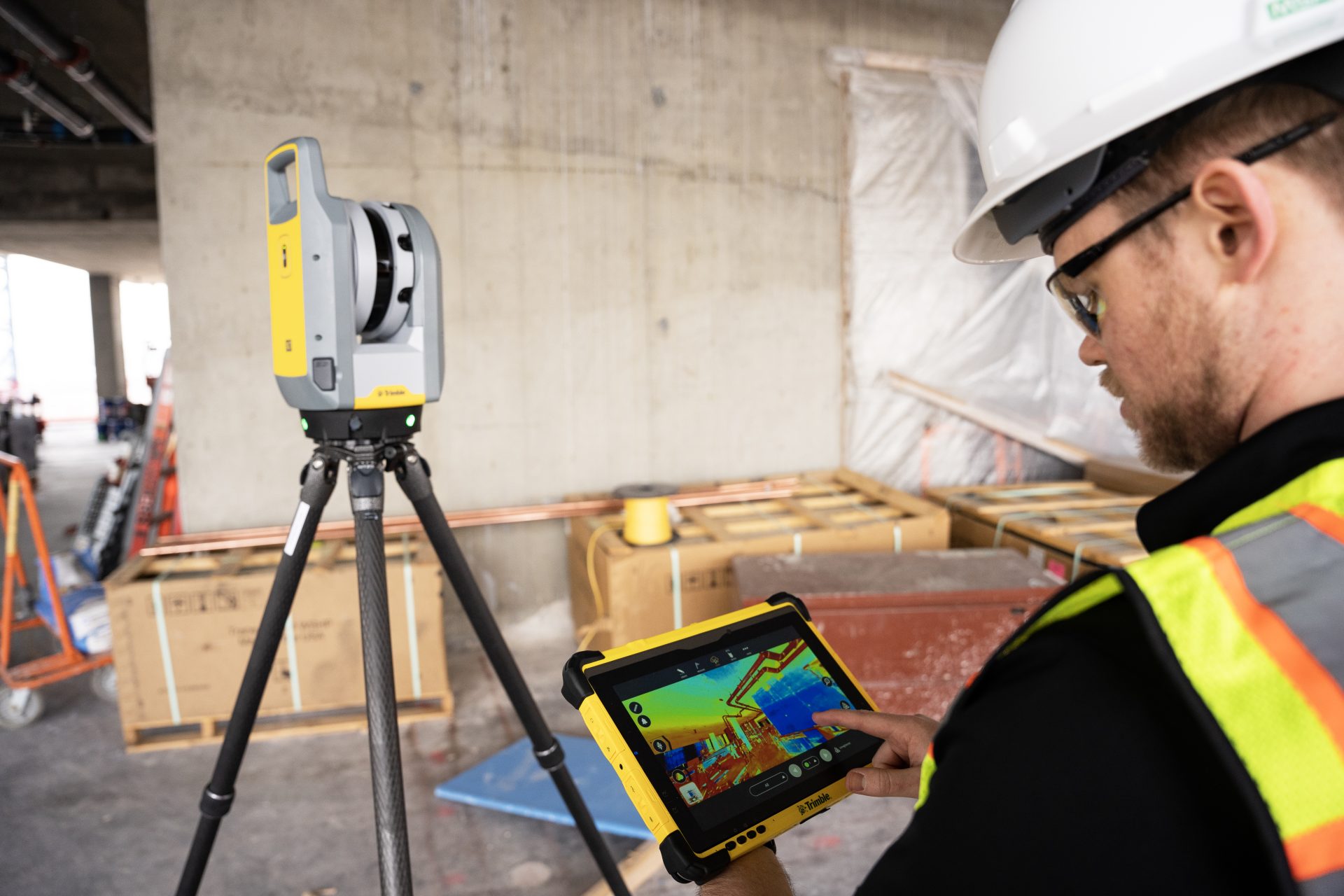
…and why more general and concrete crews are adding it to their workflow
TLDR: In construction, getting the job done right the first time is critical. For general contractors and concrete crews, 3D laser scanning offers a faster, more reliable way to verify site conditions, prevent costly mistakes, and keep projects moving. From formwork and embeds to slab elevations and coordination with other trades, scanning gives your team the clarity and confidence needed to deliver quality work on tight schedules.
See how 3D laser scanning can strengthen your workflow and improve outcomes on every project.
—
Across Canada, projects are getting tighter, schedules are getting shorter, and crews are being asked to deliver more with fewer people. For many general contractors—especially teams doing their own layout, formwork, or concrete work—the old ways of measuring and verifying simply aren’t keeping up.
That’s why more Canadian contractors are turning to 3D laser scanning. The technology is no longer “nice to have.” It’s becoming a practical, everyday tool that helps crews work faster, reduce rework, and make better decisions in the field.
Whether you’re framing, doing layout, building forms, overseeing concrete placement, or managing site coordination, scanning offers one thing everyone on a jobsite cares about: certainty.
Here are a few reasons why general and concrete contractors across Canada are making the switch.
It gives your crew a clear, reliable picture of the jobsite
Traditional measurements rely on line-of-sight, tape measures, or manual total station shots. Even experienced carpenters know:
- Walls shift,
- Slabs deviate,
- Anchor bolts move,
- As-builts don’t always match plans, and
- Relying on partial measurements can lead to costly mistakes.
A 3D scanner captures everything: columns, decks, embeds, MEP, form edges, penetrations— down to millimetres. You’re not guessing or relying on outdated drawings.
You’re working with the truth of the site as it exists today.
For many crews, this eliminates back-and-forth with other trades and stops issues before they grow into RFIs, delays, or rework.
It’s faster than manual checks and frees up skilled labour
Labour is one of the biggest pressure points on Canadian jobsites. Skilled carpenters spend far too much time verifying conditions, taking measurements by hand, and double-checking dimensions for layout or formwork. Additionally, increased workforce shortages drive up costs and cut into profitability.
3D scanning flips that equation:
- Scan an entire deck in minutes
- Capture hard-to-reach or congested areas without sending someone in
- Document progress without stopping production
- Verify subtrade work quickly before your team starts forming or framing
Instead of spending hours checking the work of others, crews can focus on building.
It dramatically reduces rework, especially on concrete
Rework is one of the most expensive and frustrating issues for GCs and self-performing crews. On concrete jobs in particular, small errors compound quickly.
3D scanning helps prevent:
- Misplaced anchor bolts
- Incorrect slab heights or slopes
- Out-of-square formwork
- Wall offsets
- Penetrations installed in the wrong location
- Tolerance disputes between trades
With a scan, you know before the pour if something is out of spec. Fixing a form before concrete is placed is a five-minute adjustment—fixing it later is a costly nightmare.
It gives you defensible documentation you can rely on
In today’s construction environment, documentation matters. A laser scan gives you a timestamped, measurable digital record of:
- Work that was completed correctly
- Conditions prior to handoff
- Dimensions prior to concrete placement
- What your team was asked to build vs. what was actually there
This protects your crews and your company.
No more debates about whether something was “done wrong” or “not built to plan.” A scan settles it.
It keeps your workers safer
Scanning lets you capture data without putting workers in risky positions.
Instead of climbing around tightly framed areas, stepping through congested mechanical rooms, or working at height to measure overhead objects, your crew can scan from a safe location on the ground.
Many contractors use a variety of laser scanners to simplify jobs in hazardous or hard-to-access areas, something BuildingPoint Canada has promoted for improving jobsite safety.
It integrates with tools you already use
Field crews using Trimble FieldLink, Robotic Total Stations (RTS), or Tekla Structures, (among other solutions), can pull scan data directly into their existing workflow. That means:
- Compare scans to the model for QA/QC
- Use scans to guide layout
- Validate formwork or embeds against digital plans
- Share scans with engineers or owners instantly
With 3D laser scanning, you’re not adding another disconnected tool, you’re adding powerful capabilities to the tools you already rely on.
It accelerates decision-making for project managers and supers
PMs and supers often struggle to make fast decisions when conflicting site information comes in. A scan provides a single source of truth:
- Is the slab flat enough for the next trade?
- Did the mechanical contractor install penetrations in the right place?
- Are we within tolerance before pouring the next deck?
- Is the steel installed where the model says it should be?
Instead of sending someone to re-measure or waiting for multiple trades to “verify,” a PM can open the scan and decide immediately.
You gain a competitive edge on bids and execution
Top contractors across Canada use scanning as a differentiator. Owners and construction managers notice when you can:
- Guarantee better QA/QC
- Reduce errors and schedule risk
- Provide detailed as-built documentation
- Prevent coordination conflicts before they hit the critical path
Scanning elevates your professionalism and reduces uncertainty—two things that win repeat business.
What this means for you as a Canadian contractor
For many good reasons, 3D laser scanning is becoming a standard on jobsites where:
- Concrete placements must be right the first time
- Layout must be fast and accurate
- Trades need coordination support
- Skilled labour is limited
- Documentation is essential
- Schedules are compressed
And importantly: It’s becoming accessible. Today’s scanners—especially the Trimble X7—are automated, self-calibrating, and simple enough for field crews to learn quickly. BuildingPoint Canada’s training and consulting helps Canadian crews get up and running fast, reducing the learning curve and improving ROI.
Want to see how scanning fits into your workflow?
BuildingPoint Canada offers demos, training, and workflow consulting to help GCs and concrete teams understand exactly where scanning can save time and prevent rework.
Latest Posts
5 ways 3D laser scanning transforms steel and MEP projects
A practical guide for Canadian fabricators, erectors, and mechanical, electrical, and plumbing contractors TLDR: Precision and efficiency aren’t optional in construction;…
Tekla PowerFab 2025i: New features and integrations now available
The 2025i version of Tekla® PowerFab® is now available, delivering new tools to help fabricators plan more accurately, manage projects…
Join BuildingPoint Canada at the 2025 CEC Annual Fundraising Golf Tournament
Join BuildingPoint Canada and the CEC for the 2025 CEC Annual Fundraising Golf Tournament. It will be a special day…